


Compared to the last set of draft plans released, the catchments closest to Melbourne’s CBD, such as Prahran and Toorak, represent a more ambitious vision of homes in the places where people want to live.
The broader application of the inner catchment zone demonstrates that the Department of Transport and Planning is becoming comfortable with the new planning tools they’ve introduced, and are willing to make big policy changes where they matter most.
In key areas like around South Yarra and Prahran train stations, the average residential lot is under 250m². Current rules—which set a 1000 square metre site minimum for denser builds—essentially require amalgamating five or more lots just to access height bonuses. This is an unnecessary hurdle for development.
We know building density on smaller lots is possible, and desirable. The rules just have to allow it, and currently they don’t.
YIMBY Melbourne calls on the Department of Transport and Planning to remove arbitrary minimum lot size constraints to ensure a broader application and utilisation of the Housing Choice and Transport Zones (HCTZ1 & 2).
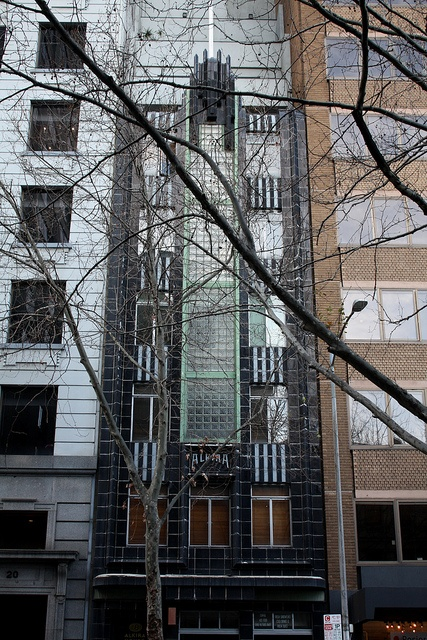
Melbourne’s Alkira House is heritage-listed and six storeys on a small site. There is no physical reason we could not build like this again.
“It is encouraging to see the level of ambition on display here. Unlocking feasible capacity is the number-one lever that Governments can pull during a housing crisis.”
“The 1000 square metre minimum lot size is the exact rule a legacy planner would create if they didn’t want to see a lot of homes actually get built. And it ignores Melbourne’s long history of building tall, thin, beautiful buildings.”
“YIMBY Melbourne and its broad coalition of members are excited to see the Activity Centres finalised later this year, and for more homes to be built in the places where people most want to live—and not just in the easy default of the city’s urban fringe.”